
Edinah Masiyiwa
For reproductive rights advocates, the recent weeks have been a major setback. The Senate recommended removing Clause 11 from the Health Services Amendment Bill — a clause designed to clarify and improve access to lawful abortion services.
Even more concerning was the statement by the Deputy Minister of Health and Child Care that he was unaware of Clause 11. Given that the Bill had already passed through the lower house, this raises serious questions about the depth and integrity of parliamentary debate on issues that directly affect women’s and girls’ lives.
The removal of Clause 11 followed sustained opposition from groups that are categorically against abortion. Yet beyond the rhetoric, we must return to the facts — and to the law.
What the Law Already Says
Abortion in Zimbabwe is governed by the Termination of Pregnancy Act (1977). Under this law, termination of pregnancy is permitted in the following circumstances:
Where continuation of the pregnancy endangers the life of the woman or poses a serious risk of permanent impairment to her physical health;
Where there is a serious risk that the child will be born with a severe physical or mental defect;
Where there is a reasonable possibility that the pregnancy resulted from unlawful intercourse, including rape.
The existence of this law is clear recognition by Zimbabwe that abortion, under specific circumstances, is a health care service.
Globally, the World Health Organization affirms that safe, respectful and rights-based abortion care is a fundamental component of health and human rights.[1] The WHO, together with the UN’s Special Programme of Research in Human Reproduction, has consistently emphasised that access to quality abortion care is part of universal health coverage and essential health services.
Clause 11 did not seek to legalise abortion beyond what the Act already allows. Its intention was administrative: to update and clarify procedures within the health system and remove barriers faced by women and girls who are already legally eligible for services.
The Reality Facing Zimbabwe’s Girls
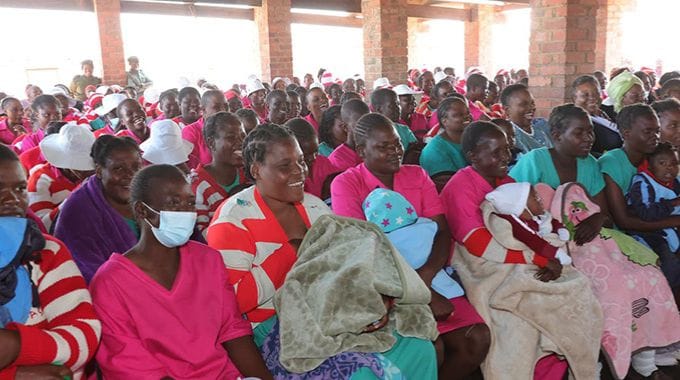
Zimbabwe continues to record troubling levels of adolescent pregnancies. A 2025 Youth Summit in Bulawayo highlighted growing concern over rising teenage pregnancies and unsafe abortions, with many young girls risking their lives due to limited access to reproductive health services and accurate information.[2]
A recent study found an adolescent pregnancy prevalence of 23.7% among girls aged 10–19 years. Of those who were pregnant, 4% had disabilities. The same study revealed significant differences by religious affiliation: 14.5% among Protestants, 15.8% among Pentecostals, 31.5% among Apostolic sect members, and 34.5% among those of African Traditional Religion, Muslim faith, or no religion.
Most alarming, 31% of respondents reported forced sex at first encounter[3].
Forced sex is rape. And rape is a criminal offence.
If a pregnancy occurs as a result of rape, the law allows the girl to terminate that pregnancy should she choose to do so. Denying or delaying access to lawful abortion services compounds the trauma and effectively punishes the survivor rather than the perpetrator.
Zimbabwe strengthened child protection through the Criminal Law Amendment (Protection of Children and Young Persons) Act, which raised the age of sexual consent from 16 to 18[4]. This was a critical step toward protecting young people from sexual exploitation and early marriages. Ensuring adolescents can access lawful abortion services is consistent with this protective intent.
Religion, Silence and Accountability
We must also confront difficult truths. Evidence shows higher pregnancy prevalence among certain religious communities. While faith plays an important role in Zimbabwean society, it cannot become a shield behind which abuse, coercion or silence thrive. Advocacy must include constructive engagement with religious leaders and communities. Protecting the girl child requires courage — including the courage to speak about what happens in spaces that are often considered sacred and beyond scrutiny.
The Constitutional Question
The Constitutional Court should seriously consider confirmation of the High Court ruling that provisions denying abortion services to women raped by their husbands and to girls under 18 are unconstitutional[5]. The confirmation will guarantees dignity, equality, bodily integrity and access to health care at the highest level. These rights cannot be selectively applied.
The Way Forward
With Clause 11 now halted, Zimbabwe must urgently develop strategies that genuinely protect the girl child from abuse in all spheres of life — home, school, church and community.
There must also be sustained public awareness of the Termination of Pregnancy Act so that communities understand what the law permits. Survivors of rape must access both justice and health services without intimidation, delay or stigma.
Zimbabwe cannot afford to be a nation where children continue to have children.
Reproductive justice is not about ideology. It is about health. It is about dignity. And above all, it is about protecting our girls.
[1] International Safe Abortion Day 2025
[2] Unsafe abortions put Zimbabwe’s young girls at risk – The Southern Eye
[3] National Assessment on Adolescent Pregnancy in Zimbabwe.pdf
[4] President assents to Young Persons Bill. . .New Act raises age of consent to 18 – herald
[5] Zimbabwe High Court Rules Against Law Denying Abortion to Marital Rape Victims, Girls Under 18