By Michael Gwarisa
When the money began disappearing from the global HIV response, the consequences were felt almost immediately.
Programmes that had depended heavily on external funding were disrupted, some activities were scaled down, and organisations working with communities faced an uncomfortable question: what happens to lifesaving health services when the money that has traditionally sustained them is no longer guaranteed?
For the AIDS Healthcare Foundation (AHF), the answer lies partly in a place few people would associate with HIV treatment: a thrift shop.
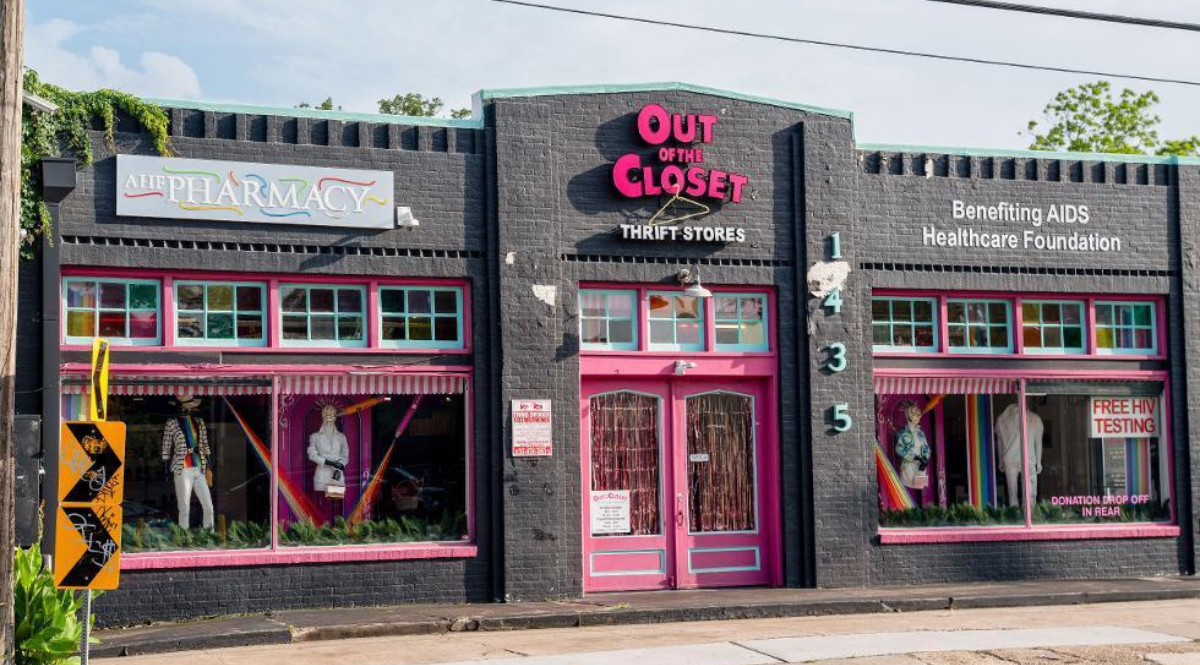
Across the United States, AHF operates pharmacies and thrift stores where people buy second-hand clothes, furniture, books, electronics and household goods. The proceeds are then channelled into the organisation’s global HIV prevention and treatment programmes.
It is an unusual model, but one that has helped AHF keep its programmes running across countries and through difficult periods.
In Zimbabwe, where AHF is marking 10 years of providing HIV services, the results of that continuity are visible in another number: more than 200,000 clients.
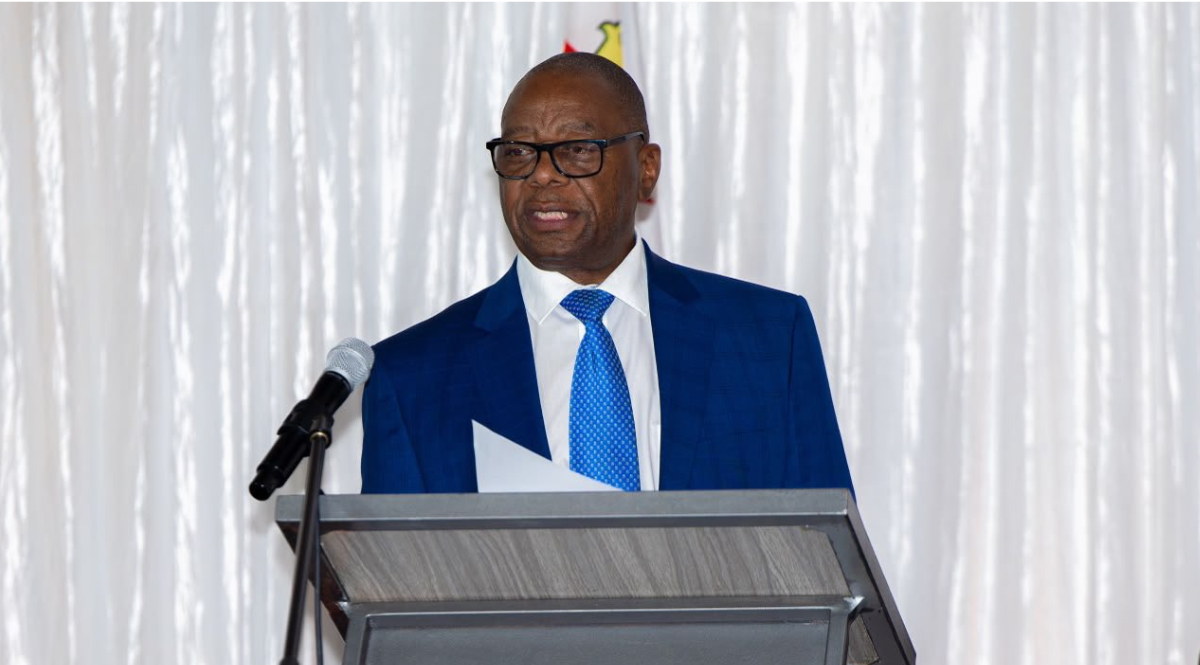
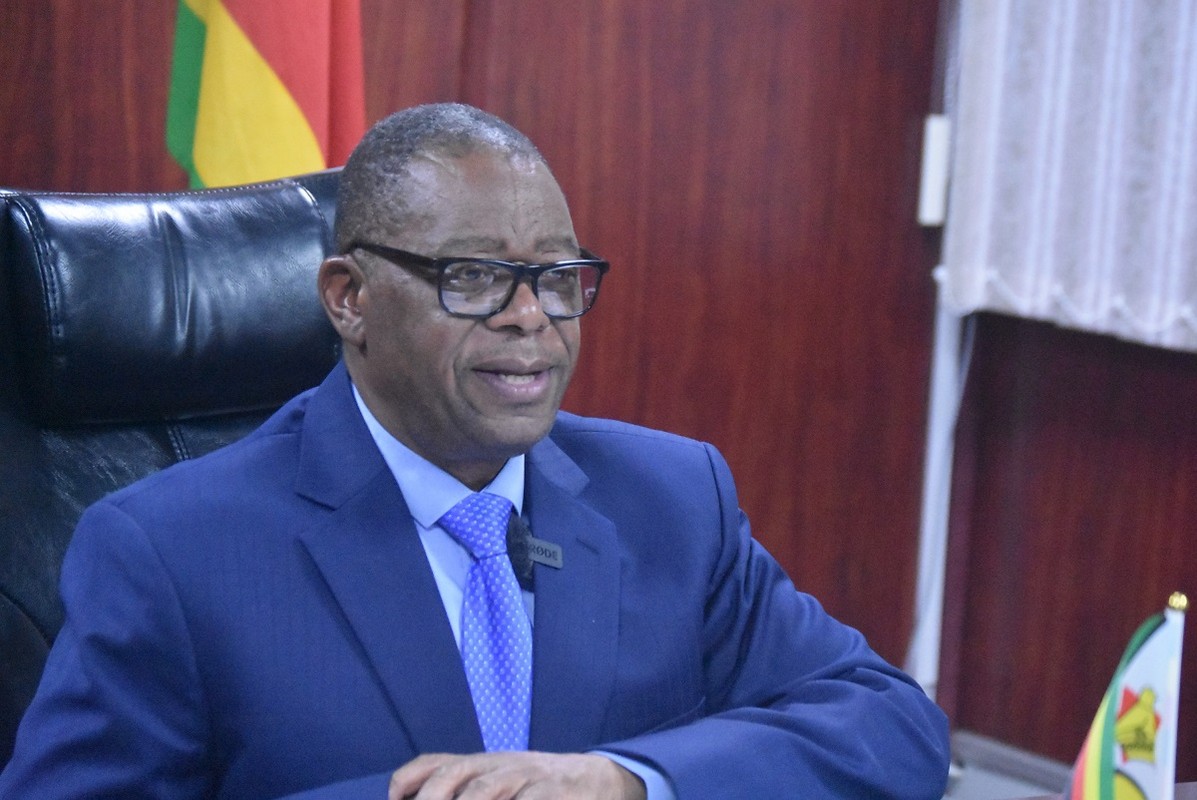
Dr Owen Mugurungi, Director of the AIDS, TB and Malaria Unit in the Ministry of Health and Child Care, remembers when the figure was dramatically smaller.
“We started from there, we saw around less than 14,000 in 2017 and guess what, 10 years later, in 2026, we have seen more than 200,000 clients in those places,” he said.
The “places” Mugurungi refers to are AHF-supported centres of excellence, established as Zimbabwe’s HIV response moved into a new phase.
For years, the urgency had been getting people onto antiretroviral treatment. But as Zimbabwe and the global HIV community moved towards the 95-95-95 targets and the ambition of ending AIDS by 2030, simply increasing the number of people on treatment was no longer enough.
The quality of that care mattered too.
“We were so happy that we were getting at a target that we wanted but most importantly, getting to that target without improving the quality of care or the quality for treatment would also not be the right thing to do,” Dr. Mugurungi said.
“Beyond the drugs we needed to make sure that people had better care and people survived.”
The partnership with AHF was therefore built around more than dispensing medicines. Zimbabwe wanted to strengthen the quality of HIV services, and the centres of excellence became part of that effort.
The first two major centres were identified at Parirenyatwa and Mpilo hospitals. From there, the model grew. The centres also became places where doctors and nurses in training could learn what quality HIV care should look like, creating an opportunity for lessons from the model to spread beyond the facilities themselves.
For Zimbabwe, that is an important part of AHF’s decade-long story. But there is another story behind those numbers. How does an organisation keep expanding its services when the global health financing environment is becoming increasingly uncertain?
The answer takes us away from the clinic and into the world of social enterprise.
Dr Ernest Chikwati, Country Program Director for AHF Zimbabwe, believes the organisation’s longevity is rooted first in its people and leadership. But he also points to a financial model that has allowed the organisation to generate resources for its programmes rather than relying entirely on traditional donors.
“Why AHF keeps going is the passion for humanity and the issue of leadership,” Dr. Chikwati said.
To understand that philosophy, he says, one has to go back to AHF’s origins in 1987, when it started as a hospice.
“You might need to go back to where we came from in 1987, started as a hospice where someone sacrificed the money they were supposed to use for other things just to save humanity.”
Over the decades, that commitment evolved into a global organisation with a distinctly unconventional way of helping finance its work.
“We are running businesses and pharmacies and thrift shops in the USA then profits from there are the ones we now use for the global programme,” Chikwati said.
“The businesses are still running, funds are still flowing and as AHF, we keep moving.”

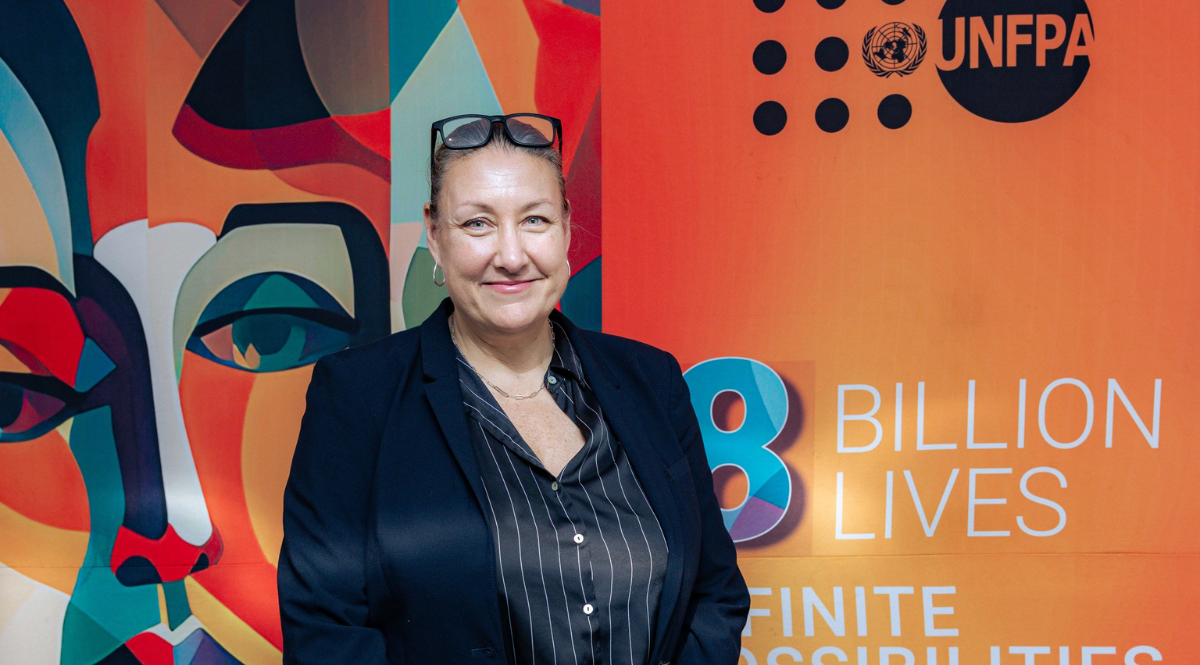
Terri Ford, AHF’s Chief of Global Advocacy, describes the model as one of the features that makes the organisation different from many other players in the global HIV response.
“We do not get any funding from donors or even the US government,” she said during a press conference in Harare.
Instead, she said, AHF has developed mechanisms to generate its own resources.
“We have our mechanisms to fund from the US. Self-generated through Pharmacies, Thrift Stores and all. That allows us to be a very unique player in the world and to have unique relationships with governments.”
AHF’s financial records, however, show that the organisation does receive grants and contributions. Its audited 2024 accounts reported more than US$106 million in grant revenue, while pharmacy operations generated billions of dollars in revenue. The distinction is that AHF has built substantial revenue-generating enterprises of its own, including pharmacies and thrift stores, which the organisation says help finance its HIV treatment, prevention and care programmes.
The economics are striking. According to AHF, 96 cents of every dollar generated through shopping or donations goes towards funding its HIV/AIDS prevention and treatment services globally. Its pharmacies operate on a similar principle.
The thrift stores, known as Out of the Closet, sell donated goods ranging from clothing and furniture to books and household items. Some stores also offer free, confidential rapid HIV testing and house AHF pharmacies where patients can collect prescriptions.
The concept is simple enough: people donate, customers buy, the business generates revenue, and that revenue helps finance HIV services. But its significance becomes clearer when viewed against the volatility of global health financing.
AHF says the model has enabled it to maintain services in countries facing vastly different political and economic circumstances.
“We have worked in Russia for more than 10 years, in China, Myanmar, and Haiti, and in Ukraine in the middle of war AHF is still there,” Ford said.
“We have never shut down even one of our clinics.”
For AHF, financial resilience is therefore not simply about keeping an organisation alive. It is about keeping treatment available to the people who depend on it. But money is only part of the explanation for the organisation’s longevity.
Dr Penninah Iutung, AHF’s Executive Vice President, describes an organisation shaped by decades of advocacy, experimentation and difficult lessons.
“We have learnt some tough lessons over the years,” she said.
AHF’s early work in Africa was shaped by a very different HIV landscape, when AIDS was still heavily stigmatised, antiretroviral medicines were largely inaccessible to many people in the Global South and there were doubts about whether African patients could successfully adhere to treatment.
AHF established some of its early clinics in South Africa and Uganda partly to challenge those assumptions. As patients began taking treatment, improving their health and demonstrating that they could adhere to their medication, the clinics became evidence against the arguments that had been used to deny or delay access to treatment.
Advocacy became another weapon.
Iutung recalls a time when treating one patient for HIV could cost about US$5,000 a year. Through advocacy, pressure on pharmaceutical companies and collaboration with partners, that cost was eventually brought down to about US$100.
“We learnt that advocacy is key, no matter where you are, advocacy will remain key and get your results faster,” she said.
That history helps explain why AHF’s model cannot simply be reduced to thrift shops and pharmacies. Its resilience has been built from several moving parts: service delivery, advocacy, partnerships, leadership and the ability to rethink its models as the epidemic changes.
Iutung says the needs of people living with HIV are not static. Young people, for example, have a different relationship with HIV from generations who witnessed the height of the AIDS epidemic. Retaining patients in care has also become increasingly important because treatment only works when people remain engaged with services and maintain viral suppression.
For Zimbabwe, the next chapter of the partnership is therefore unlikely to be about simply putting more people on treatment. It will be about ensuring that those people receive quality care and remain in it. That is where the significance of AHF’s 10 years in Zimbabwe becomes clearer.
The organisation’s story is not simply one of clinics, medicines or patient numbers. It is also a story about what happens when a health organisation builds an alternative financial engine behind its public health mission. A thrift shop in America may seem a world away from a patient collecting antiretroviral medicines in Zimbabwe.
Yet, through AHF’s model, the two are connected. A donated shirt can become revenue. Revenue can help sustain a programme. A programme can keep a clinic open. A clinic can keep a patient on treatment. And treatment can give that patient the chance to live a longer, healthier life. That is the unlikely journey from second-hand clothes to second chances at life, and one of the reasons AHF believes it can keep going.
“We are not going away,” Ford said. “We will stay and we fight to the end.”