
By Michael Gwarisa
The Avenues Clinic has invested approximately US$500,000 in upgrading its Intensive Care Unit (ICU), High Dependency Unit (HDU) and Coronary Care Unit (CCU), in a move aimed at improving patient safety, clinical outcomes and the working environment for healthcare staff.
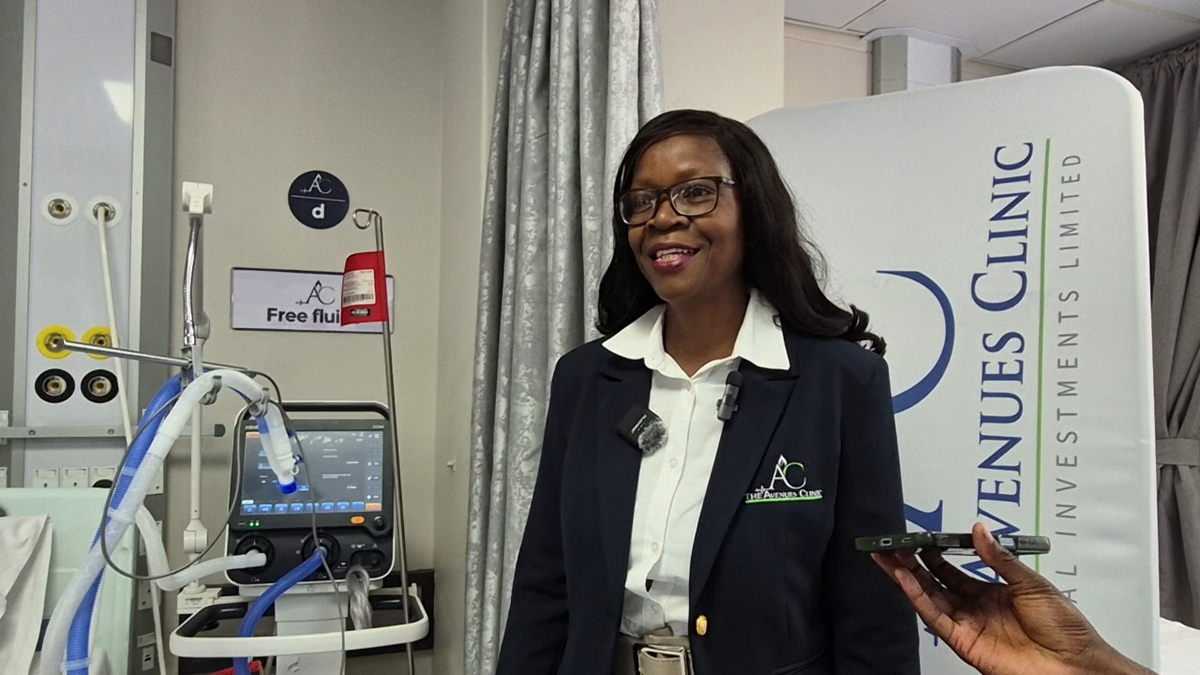
The upgrade has introduced new critical-care infrastructure and technology, including additional dialysis points, modern patient monitoring systems and improved bed-head units that centralise access to medical gases, power and monitoring equipment.
The clinic’s Managing Director, Sibusisiwe Ndhlovu, said the investment had significantly improved the functionality and safety of the critical care units.
“We have done quite a number of improvements here. We have Mindray monitors and have changed the bed heads, which is where the various gases and monitors are plugged in,” Ndhlovu said.
“What this means is that all our equipment is now in one point. We are not sharing plugs, which improves safety for the patient and also contributes to better clinical outcomes.”
The upgraded unit has also introduced moisture detection technology designed to assist nurses in monitoring patients who may be unable to alert staff when they require assistance.
Ndhlovu said the technology would help reduce the pressure on nurses while ensuring that patients received timely attention.
“Patients who are here at times cannot assist themselves. Accidents happen. This device is placed between the bed and the mattress and detects moisture. It alerts the nurse, who can then attend to the patient,” she said.
One of the most significant improvements has been the expansion of dialysis access across the critical care unit.
Previously, the entire ICU, CCU and HDU had only one dialysis point, meaning patients sometimes had to be moved to another location to receive dialysis.
“We used to have only one dialysis point across this entire unit, which is where we dialysed patients. Now we have 13 dialysis points,” Ndhlovu said.
“All the beds we have here have dialysis points, and we have also configured additional points in various areas of the CCU and HDU.”
She said the expansion would allow the clinic to accommodate more patients while reducing the need to move critically ill patients between departments.
“This means we can cater for more patients in a more comfortable manner,” Ndhlovu said.
Looking ahead, the clinic plans to incorporate more technology into its critical-care operations.
“Going forward, we will be introducing more of these improvements. They also mean that for our very dedicated nursing team, who are here around the clock, it is a better working environment,” she said.
“They do not have to constantly check whether the patient is doing well because we are using technology to help them. They are less stressed. This is the most emotional ward in the facility.”
The clinic’s Financial Controller, Oscar Maradzamunda, said the investment formed part of a broader programme to modernise the hospital.
“We spent half a million dollars on this critical care unit. This investment was to upgrade our infrastructure, equipment and bedding,” Maradzamunda said.
“To date, we have managed to spend about US$4 million on the refurbishment of the whole hospital.”
He said the clinic’s next major project would be the upgrading of its theatre facilities, which is expected to begin in the coming quarter.
Maradzamunda expressed gratitude to the clinic’s board and shareholders for supporting the continued investment in the facility.
“This kind of investment is aimed at producing good clinical outcomes for the community and the Zimbabwean community at large,” he said.
He added that the clinic also sought to complement government efforts to strengthen Zimbabwe’s healthcare system.
“We would also like to partner with government, as our work complements government efforts to ensure that our health sector is up to speed. We want to upgrade and modernise our equipment so that we can save lives and serve everyone better,” Maradzamunda said.