Kuda Pembere
The completion of renovations at Parirenyatwa Group of Hospitals, including Mbuya Nehanda Maternity Hospital and Adlam House, a residence for nursing students, has been pushed to August this year on the back of equipment delivery delays.
Adlam House had been earmarked for completion by February 14, while works at Mbuya Nehanda Maternity Hospital were expected to conclude by 18 April, Zimbabwe’s Independence Day. However, officials say the final phase of the project, which hinges on the installation of critical equipment, has slowed progress.
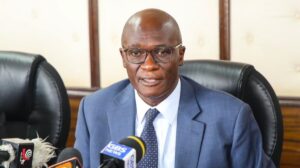
Speaking to journalists after assessing progress, Special Advisor to the President Responsible for Monitoring Implementation of Government Programmes, Dr Joram Gumbo, said contractors pointed to outstanding deliveries as the main constraint.
“So what we got here is that there are some issues pertaining to the delivery of some of the equipment that is required, which might take time, but from the contractors’ point of view, they believe that if all goes well, they could be finished by August this year, which is really a good thing because this hospital, from what we got, has got many facilities to be undertaken,” Dr Gumbo said.
“Not only is the training of nurses and so forth, but also the accommodation site also important.”
He said the visit was meant to monitor refurbishment works following President Emmerson Mnangagwa’s directive last year.
“Our visit here at the Parirenyatwa Group of Hospitals is actually to monitor the works that are taking place here at the hospital. The refurbishment that is going on. You would remember that His Excellency visited this place last year and made a call that the place needed some attention.
“And even from our talks as we went around, what we are seeing today ourselves, we have not been here before. There is a marked difference from what it looked like last time. A lot of work is taking one place, particularly at this (Adlam) site,” he said.
Dr Gumbo also toured Mbuya Nehanda Maternity Hospital, where additional equipment is expected to boost service delivery.
“We have also gone to other places where we have been shown places where some machines are going to be installed for various, you know, attentions for the sick. So we are definitely happy to see that this is what is happening. Because a healthy nation has got healthy people. Without healthy people, you cannot develop a country,” he said.
He added, “The renovations have improved the number of patients that can be treated and the number of nurses that can also be housed at this institution. So we are actually very impressed by what we have seen.”
Renovations began last July, and officials have offered varying assessments of progress over time.
Last month, Finance Secretary George Guvamatanga told journalists that Mbuya Nehanda Hospital was about 70 percent complete and Adlam House more than 90 percent finished. The latest assessment from the Health Ministry places Adlam House at 95 percent completion, with Mbuya Nehanda Maternity Hospital now about halfway complete as attention shifts to equipment installation and internal fittings.
“So the renovation started in July and now we are in February. We have seen remarkable progress in terms of the School of Nursing, Adlam House, where the student nurses stay. And the nurses’ residence, has shown more than 95% completion. We are left with just making it habitable.
“Otherwise the infrastructure, the basic infrastructure is done. In terms of Mbuya Nehanda Maternity Hospital, we have seen increased capacity from 220 beds. Now I talk about 265 potential to more than 300 beds in the hospital.
“And increasing facilities such as theatres to three. And in terms of progress, we are looking now at plus or minus 50%, where the remainder is really equipment, making sure that all the facilities that have to do with the walls, furniture, equipment, the lifts are in place. So our estimate, as we have been told by the contractor, is in August we should be finished,” he said.
Once complete, the modernisation programme is expected to serve as a model for upgrades at other public health institutions as Government seeks to strengthen critical health infrastructure and improve service delivery nationwide.