
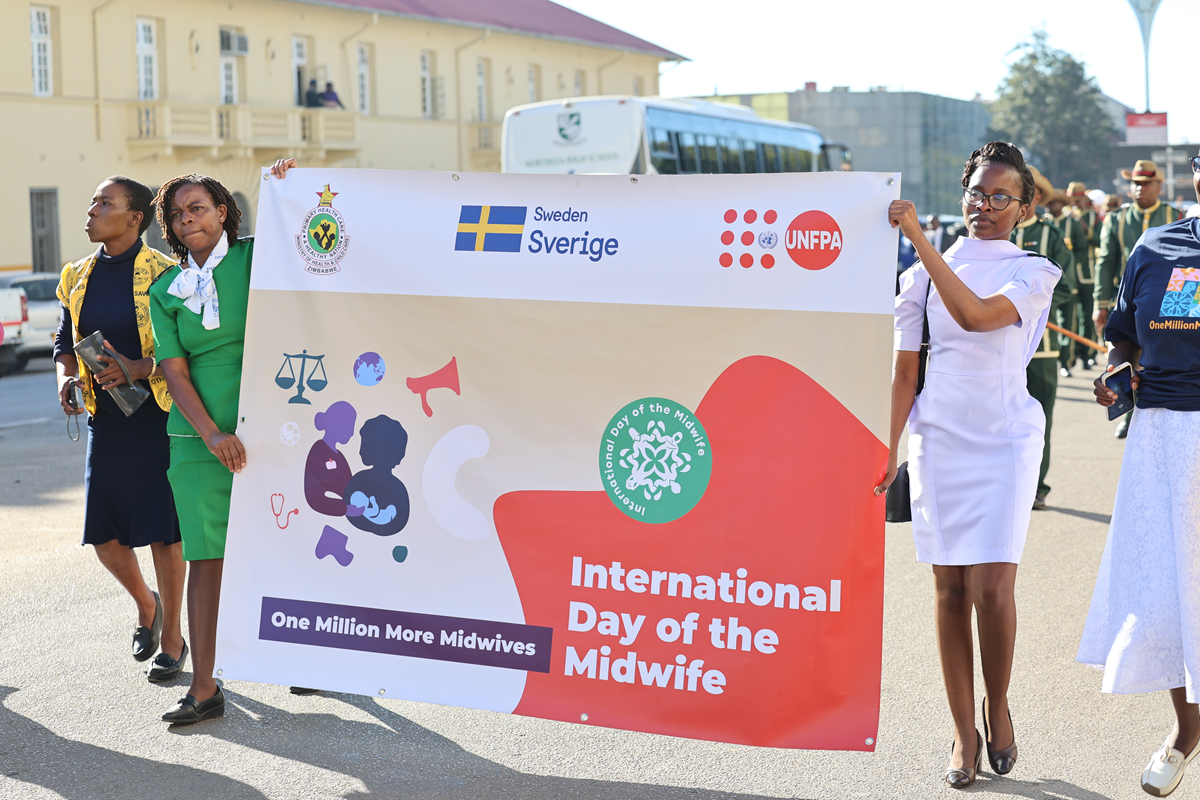
Michael Gwarisa in Bulawayo
The Government of Zimbabwe has reaffirmed its commitment to strengthening the country’s health workforce amid growing calls for increased investment in midwives to help reduce maternal and newborn deaths.
Speaking during the International Day of the Midwife commemorations and awards ceremony held at United Bulawayo Hospitals, Deputy Minister of Health and Child Care Sleiman Kwidini said midwives remain central to Zimbabwe’s maternal and reproductive healthcare system.
Commemorated under the global theme “One Million More Midwives,” this year’s event highlighted the worldwide shortage of nearly one million midwives needed to provide essential maternal, newborn, sexual and reproductive health services.
Kwidini said despite difficult working conditions and limited resources, Zimbabwean midwives continue to provide lifesaving care across hospitals, clinics and rural health facilities.
“Midwives are at the centre of safe motherhood and quality reproductive healthcare. They provide essential care before, during and after childbirth and support maternal and newborn health, family planning, breastfeeding, adolescent sexual and reproductive health services and community health education,” said Kwidini.
“In Zimbabwe, midwives continue to serve with professionalism, resilience and commitment often under difficult conditions and with limited resources. Across hospitals, clinics and rural health facilities they remain on the frontline of care and are often the first and sometimes only skilled health professionals available to women and families.”
He said evidence continues to show that properly trained and supported midwives help reduce maternal and newborn mortality while improving healthcare access for women and communities.
The Deputy Minister also commended midwives who were recognised during the awards ceremony for their outstanding contribution to maternal healthcare delivery across Zimbabwe’s provinces.
Sweden’s Ambassador to Zimbabwe Per Lindgärde said the global shortage of midwives requires urgent investment in education, employment, leadership and professional support systems for healthcare workers.
“This theme highlights an urgent global reality. The world faces a shortage of nearly one million midwives needed to provide essential maternal, newborn, sexual and reproductive health services,” said Lindgärde.
“It is also a call for governments, development partners and health systems to invest in the education, employment, leadership and professional support that midwives require in order to work effectively and to their full scope of practice.”
The Swedish envoy said Sweden remains committed to supporting Zimbabwe’s maternal and reproductive health sector through partnerships with multilateral organisations including the United Nations Population Fund.
“Sweden has a long-standing commitment to global health, gender equality and sexual and reproductive health and rights. Through SIDA and partnerships with multilateral organisations including UNFPA, Sweden continues to support efforts aimed at strengthening midwifery education, leadership, regulation and workforce development globally,” he said.
Lindgärde also warned that changing global funding landscapes could threaten gains made in maternal and reproductive healthcare, making domestic investment increasingly critical.
UNFPA Zimbabwe Country Representative Miranda Tabifor said investing in midwives is central to ending preventable maternal deaths and improving reproductive health outcomes.
“The International Confederation of Midwives underscores a stark reality: ensuring safe, high-quality maternal and newborn care requires closing a massive global gap of one million more midwives,” said Tabifor.
“This goal directly aligns with UNFPA’s mandate. We place midwives at the absolute centre of our mission to end preventable maternal deaths, end the unmet need for family planning and end gender-based violence.”
Tabifor commended Zimbabwe for launching the Health Workforce Strategy 2023-2030 and the Zimbabwe Health Workforce Investment Compact 2024-2026, which prioritise expanding health education and human resources training.
She added that UNFPA, with support from the Health Resilience Fund and Maternal and Newborn Health Fund, continues supporting the Ministry of Health and Child Care through pre-service and in-service midwifery training programmes.
“Every single dollar invested in midwifery yields up to 16 dollars in social and economic gains,” she said.
Tabifor also highlighted the growing use of digital innovations in maternal healthcare, including the electronic partograph being showcased at UBH for real-time monitoring of maternal and fetal wellbeing during childbirth.