By Michael Gwarisa
The Government has acknowledged that financial barriers are preventing some pregnant women from accessing life-saving maternal healthcare and says it is finalising legislation that will introduce free healthcare for every Zimbabwean citizen and resident.
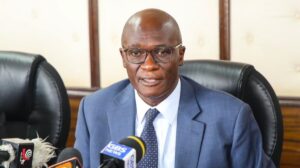
Responding to concerns raised in Parliament, Minister of Health and Child Care Dr Douglas Mombeshora said the proposed National Healthcare Provision Programme is expected to significantly reduce out-of-pocket healthcare costs, including those associated with emergency ostetric care.
The remarks came after Hon. Karenyi questioned the Government over reports that some expectant mothers are being asked to pay for caesarean sections, with some unable to afford the fees, resulting in dangerous delays in receiving treatment.
“Many expecting mothers report that they are being asked to pay for a caesarean section. Some cannot afford these costs, which results in a delay in receiving the care they need,” Hon. Karenyi said.
She asked whether the Ministry had assessed whether financial constraints were contributing to Zimbabwe’s poor maternal and newborn health outcomes and what measures were being taken to ensure no woman is denied emergency obstetric care because of inability to pay.
In response, Dr Mombeshora admitted that financial challenges remain a barrier for some families seeking healthcare.
“Yes, at times access is indeed difficult because of financial constraints,” he told Parliament.
He revealed that Government has completed drafting legislation for a National Healthcare Provision Programme, formerly referred to as the National Health Insurance Programme, which will guarantee free healthcare for all Zimbabwean citizens and residents.
“The draft Bill is complete, and I have been communicating with our Minister of Justice, Legal and Parliamentary Affairs. Anytime soon, I think it will be discussed in the Cabinet Committee on Legislation so that we can bring it here,” said Dr Mombeshora.
“In that piece of legislation, the Government is coming up with free healthcare for every citizen of Zimbabwe and every resident of Zimbabwe.”
The Minister said the programme would be financed through multiple funding mechanisms, details of which would be outlined once the Bill is brought before Parliament.
He urged legislators to support the proposed law, saying its passage would ease the financial burden faced by patients.
“The sooner it is passed in Parliament, the sooner it will be implemented and it will reduce the out-of-pocket challenges,” he said.
Dr Mombeshora also highlighted measures already being implemented to improve maternal healthcare, including Government funding for blood supplies used during childbirth.
“As the Government, currently, we are paying for all blood so that all women who need blood during delivery will have that blood supplied to them for free,” he said.
He noted that while blood is generally available through the National Blood Service Zimbabwe, occasional shortages affect specific blood groups because of limited donations.
The Minister stressed that Government policy does not allow women to be denied essential obstetric services because they cannot pay.
“Ideally, our policy is that no woman needing obstetric care should be charged money,” he said.
However, he acknowledged that hospitals sometimes ask patients to purchase medicines or medical commodities that may be out of stock at health facilities.
“At times it is because the commodities that are needed may not be in the hospital, so the hospitals will end up writing prescriptions for those commodities to be available.”
Dr Mombeshora maintained that charging women for the surgical procedure itself is contrary to Government policy.
“As for the services, to say a woman will not have a caesarean section because she does not have money to pay for the procedures, that is not our policy.”
He encouraged Members of Parliament and the public to report any cases where women are denied emergency obstetric care because they cannot afford to pay.
“Should that happen, please let us know the institution and, if possible, the name of the patient so that we can make the necessary interventions,” he said.