By Kuda Pembere
Zimbabwe is recording close to 8 000 new cancer cases annually, with health experts warning of a rising burden driven by post-COVID trends and persistent gaps in early detection and reporting.
Registrar of the Zimbabwe National Cancer Registry, Eric Chokunonga, said the country recorded its highest number of cases in 2022.
“But what we have are the most frequently occurring cancers. In terms of the number of new cases, Zimbabwe is now recording close to 8,000 new cases per year. So in 2022, we had more than 8,000 new cases,” he said. “And I think that is the highest figure that we have recorded in the registry.”
Preliminary estimates show prostate cancer accounts for about 35 percent of new cases among men, while cervical cancer contributes more than 40 percent of cases in women.
“So in terms of new cases, in males, prostate cancer is by far the commonest cancer, accounting for 35% of all new cases and is followed by oesophagus. In women, the most common cancer is cervical cancer and it accounts for more than 40% of all female cancers… and of course cervical cancer is followed by breast cancer,” he said.
Chokunonga said cases have been increasing in the aftermath of the COVID-19 pandemic, although the exact causes remain unclear.
“Let me quickly point out that post-COVID cancer is now a very serious problem. We are seeing a huge rise in new cases of cancer after COVID. So we’re not sure what is causing this,” he said.
Despite the rising burden, compiling national cancer statistics remains a slow and complex process. Zimbabwe’s latest available dataset is for 2022, which Chokunonga said is relatively up to date by international standards. Chokunonga said compiling national cancer data is a complex and time-consuming process.
“Cancer registration is a serious business. And I think many people do not know exactly what is involved in cancer registration, the methods of collecting data, collecting the data, and to make sure that the data reported are accurate.
“So it is a long process. So globally, the latest data available that is from cancer registry is that of, I think, 2018. So that’s the real data from cancer registries.
“But the estimates done by the International Agency for Research on Cancer, these estimates are also based on data from population-based cancer registries. So the latest data, the latest estimates are for 2022. These are the ones that are reported in the global estimates,” he said.
He said Zimbabwe is relatively up to date, with the most recent data covering 2022.
“So we now have data for 2022. And this is not met by international standards. So it takes a long process to gather the data and to clean up the data, because we want to make sure that the data that we report are clean,” he said.
However, he noted several challenges affecting data collection, including staff shortages and delays in reporting by data sources such as pathology departments.
“There are quite a number of challenges. First of all, there is the issue of manpower. The Zimbabwe National Cancer Registry is attempting to collect incident cases for the whole country. So it requires a lot of people, a lot of personnel to do the data collection, data entry, quality checks, and so forth.
“So the registry is not adequately staffed, but the ministry is looking into that. So very soon, we expect to have adequate staff for the registry.
“And also, from our sources of information, where we collect data, sometimes they also have their challenges. Pathology reports sometimes do not come in time.
“So that is the reason why we are having this meeting, to encourage our data sources to report to the registry timeously.
“In terms of notifications, at the moment, it’s voluntary, because cancer is not a notifiable disease. So sometimes it takes long to get the data from our sources. In the absence of legislation, it is a bit difficult,” he said.
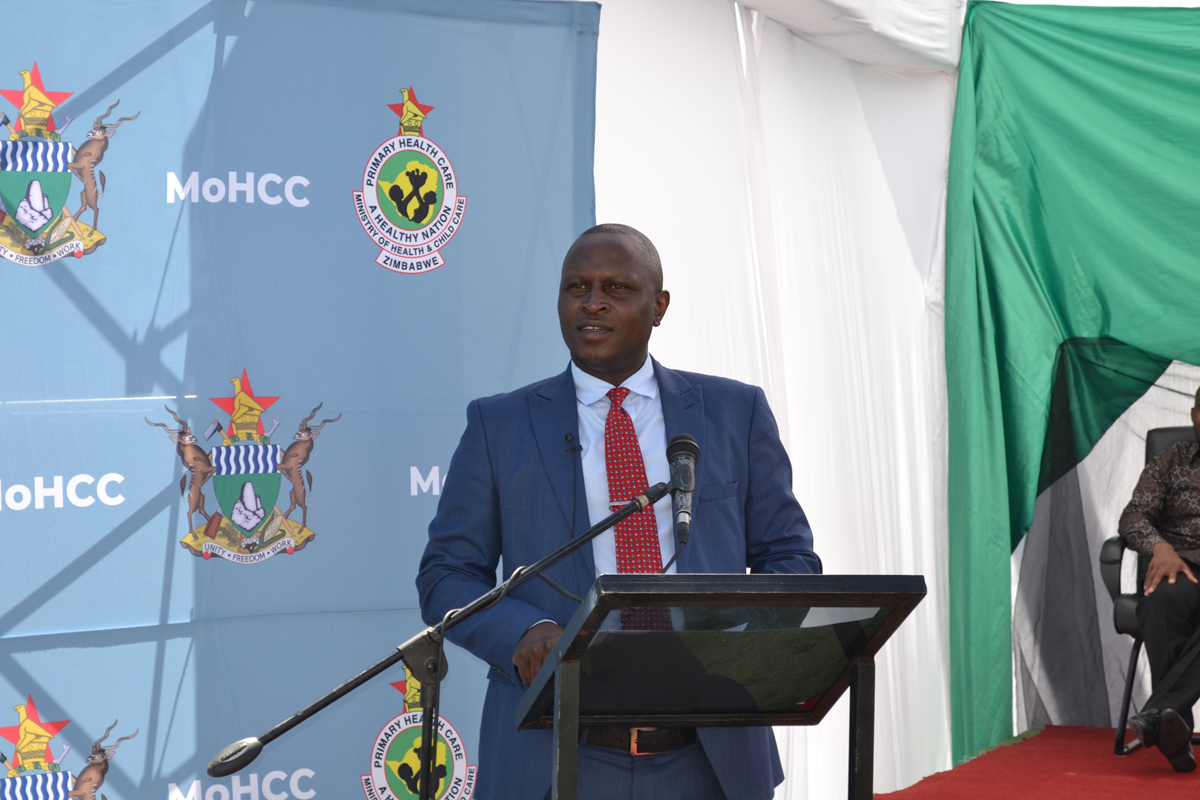
The Health Ministry Director for Non-Communicable Diseases Justice Mudavanhu told stakeholders that over 80 percent of cancer cases report in the late stages.
“Social determinants also contribute a lot. Poverty, low literacy, limited access to care, gender inequalities. They contribute to some of the late stage presentation that we talked about. Then also genetics, they contribute a small proportion, less than 10% of the cancers. So we now talk about cancer diagnosis. So maybe I can stand here so that I can see also. So here I’m just mapping the patient journey.
“I was trying to understand why we have 80 to 90% late presentation of cancer. I said stage three and stage four. When patients present at this stage, the prognosis is very poor most of the time. But so why is it like that? So step one, symptom recognition. Sometimes there’s low symptom recognition of cancers among our people. There’s also fear and stigma,” he said. “You know, sometimes when someone says it’s cancer, they think it’s now a death sentence. Then also financial barriers. So what do they contribute to? They contribute to the patient delay.”