By Michael Gwarisa
The Zimbabwe Association of Women in Mining (ZAWIMA) has raised alarm over significant health and safety risks in the mining sector, where women are handling hazardous chemicals, such as mercury, without proper training or protective measures.
Mercury is a shiny liquid metal that attacks the nervous system. Exposure can result in life-long disability, and is particularly harmful to children. In higher doses, mercury can kill. Its largest use globally is in small-scale gold mining.
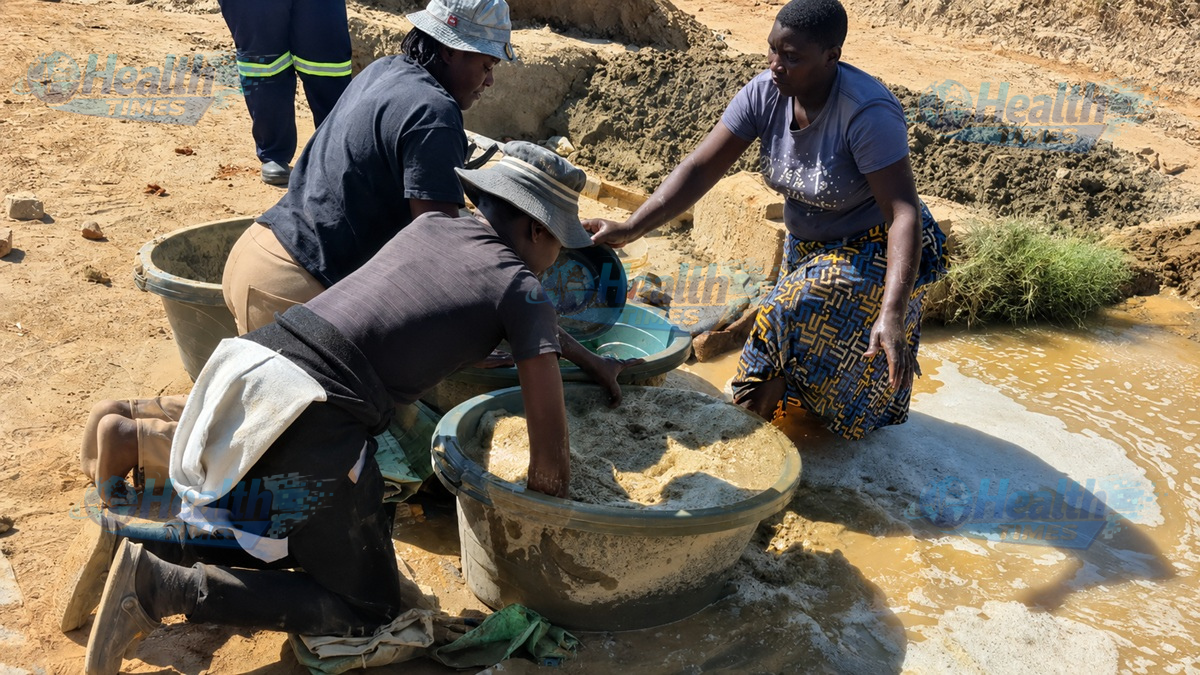
In Zimbabwe, women’s contact with mercury is highly prevalent in artisanal mining where women are assigned lighter but dangerous tasks, including crushing, sluicing, washing, panning, sieving, sorting among other tasks.
ZAWIMA has called for urgent training and capacity-building interventions to address these safety concerns.
We have observed that women are handling chemicals with their bare hands, and some even store these chemicals in their homes without understanding the dangers involved,” said Chipo Muzulu, ZAWIMA’s Programs Director.
She added that surveys conducted in three provinces revealed widespread health and safety issues among women miners. “Our major concern is the improper handling of mining chemicals. Most women entering the mining sector lack the necessary knowledge to deal with these substances safely,” Muzulu emphasized.

To address the crisis, ZAWIMA has secured funding to implement a health and safety program in Mashonaland West, Midlands, and Matabeleland South. The initiative focuses on raising awareness and training women on safely handling mining chemicals.
Women account for an estimated 10% of Zimbabwe’s 535,000 artisanal and small-scale miners. Many are driven to mining by economic hardships, including declining agricultural productivity caused by climate change and erratic weather patterns.
Charity Moyo, ZAWIMA’s outgoing Programs Coordinator, said ignorance and lack of information are behind the hazardous practices. “You’ll find women storing mercury in their kitchens or using teaspoons meant for household use. This happens because they lack knowledge. Poverty is pushing them into mining without adequate preparation,” Moyo explained.
Zimbabwe’s mining sector, long dominated by men, faces numerous challenges, including gender discrimination, violence, child labor, environmental degradation, and unsafe practices like the widespread use of mercury.