
Published First on https://www.lshtm.ac.uk/
LSHTM Vaccine Centre Co-Director Dr Muhammed Afolabi discusses the Bundibugyo Ebola outbreak, the challenges of developing a vaccine against it and how to prepare for future outbreaks.
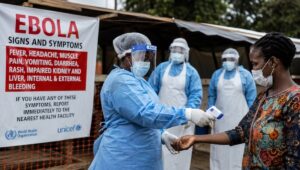
On 17 May 2026 the World Health Organization (WHO) declared the outbreak of Ebola disease in the Democratic Republic of the Congo and Uganda a public health emergency of international concern (PHEIC).
Importantly, Africa CDC identified the epicentre of the outbreak as the Democratic Republic of the Congo’s Ituri province. This is a known high-traffic mining area with intense population movement – increasing the risk of regional spread. The WHO highlighted that the region’s ongoing conflict may restrict the movement of surveillance teams and limit the deployment of rapid response resources.
LSHTM expert Dr Daniela Manno, from the Centre for Epidemic Preparedness and Response, also provided a rapid reaction to the outbreak, explaining what Ebola is, the risk to the UK population and common symptoms and treatments with Professor David Heymann also commenting on the need for community engagement.
This particular Ebola outbreak is caused by the Bundibugyo virus, a rare Ebola-causing virus for which there are currently no licensed vaccines or therapeutics. We asked LSHTM Vaccine Centre Co-Director Dr Muhammed Afolabi why there isn’t a vaccine yet and what can be done to tackle the outbreak in the meantime.
There are already vaccines for Ebola – why don’t they just use these again?
Crucially, while we have licensed vaccines (Ervebo® and Zabdena/Mvabea®) and therapeutics (ZMapp) for the Zaire strain, there are currently no licensed vaccines or specific antiviral treatment methods approved for the Bundibugyo virus.
That matters because the current Ebola vaccines are species specific, so they can only protect against the Zaire ebolavirus. In short, the current vaccines work by producing an immune response of antibodies targeting a surface molecule (glycoprotein) present on the Zaire virus. However, the Bundibugyo virus does not have the same glycoprotein on its surface, rendering the antibody defence provided by current vaccines useless. Therefore, deploying the current vaccine would provide no protection against this strain.
If there isn’t a vaccine, what other treatment options are available?
While no specific antivirals or vaccines are licensed for Bundibugyo Ebola virus, there are two main categories of treatment; supportive care and broadly neutralising antibodies.
Supportive care is the current gold standard of treatment and is known to save lives. It involves ensuring infected patients are hydrated, have enough oxygen and can maintain their blood pressure while also treating any bacterial infections that may also be occurring.
Another option, currently being investigated for therapeutic development, is the use of broadly-neutralising antibodies against the Ebola virus. Researchers have found that antibodies from survivors of previous Bundibugyo virus outbreaks can be used to neutralise multiple ebolavirus species, including Zaire, Sudan, and Bundibugyo. These antibodies work by attacking parts of the outside of the virus that remain the same across the different species – hence the term broadly-neutralising.
One candidate antibody cocktail (rEBOV-515 and rEBOV-442), still being researched, has shown high therapeutic effectiveness in non-human primates against the Zaire, Sudan and Bundibugyo Ebola strains.
It is important to stress that these results are still subject to further research and so the antibody cocktail is not yet licensed for public use. However, it represents a positive crucial pipeline of potential treatment for this outbreak.
How can you stop the outbreak from spreading if there isn’t a vaccine?
Containment relies entirely on classical public health measures, which are highly effective when rigorously implemented. Africa CDC has identified this as the cornerstone of its response:
- Surveillance and contact tracing: Active case finding and meticulous tracing of all contacts for 21 days (the maximum incubation period) to rapidly break chains of transmission.
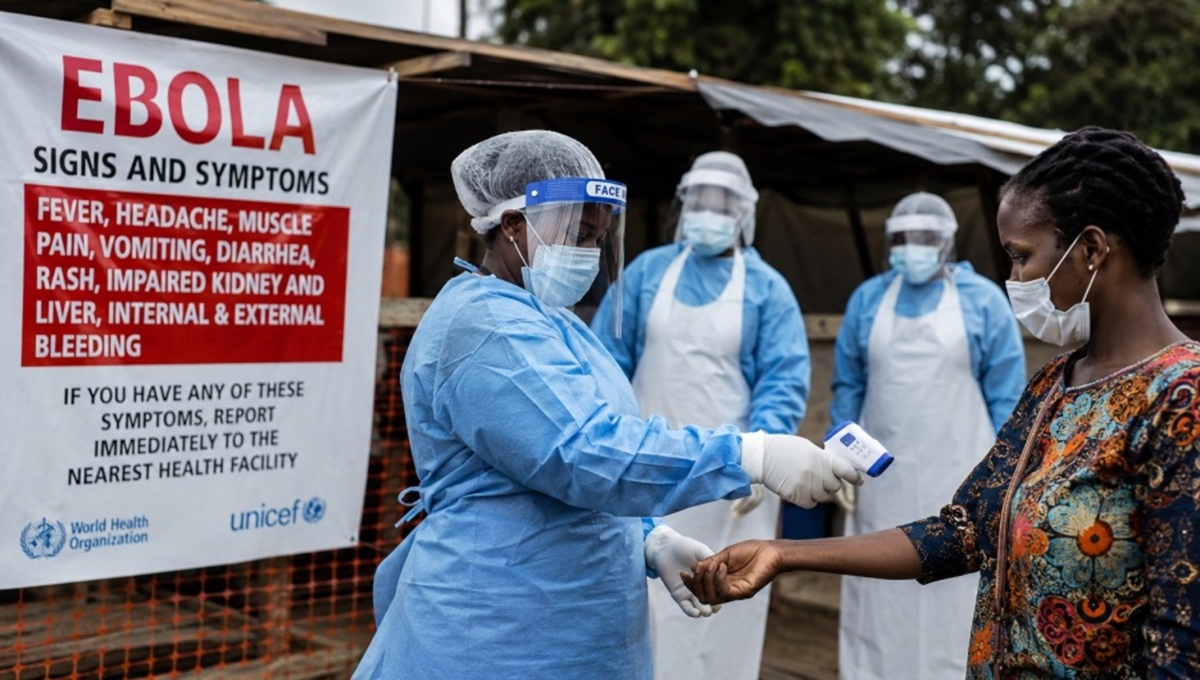
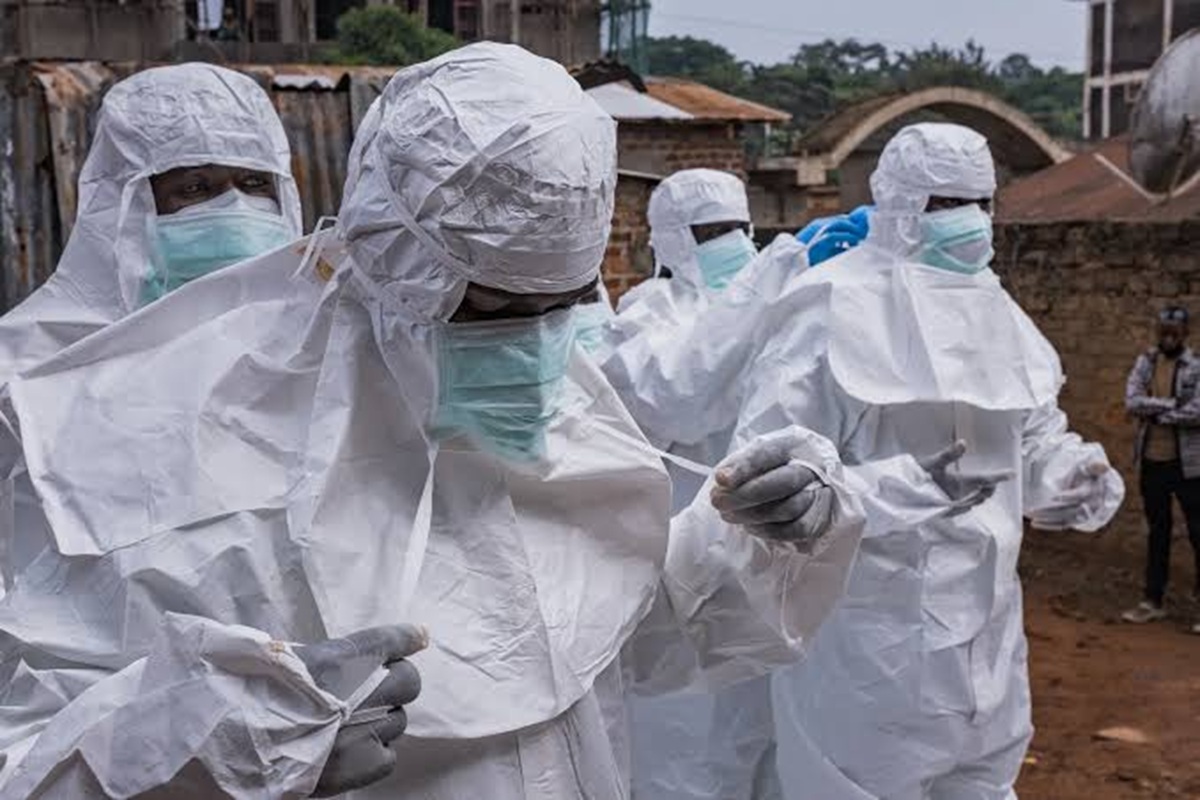
- Infection Prevention and Control (IPC): This is paramount in healthcare settings, which have been hotspots for transmission. It includes isolating suspected cases, using personal protective equipment (PPE), and strict decontamination of surfaces.
- Safe and dignified burials: The bodies of those who die from Ebola Virus disease are highly infectious. Trained teams must conduct burials that prevent mourners from direct contact with the deceased, a common source of superspreading events.
- Community engagement: Gaining the trust and cooperation of local communities is essential for early reporting of cases, accepting isolation, and adopting safe burial practices.
Why didn’t we already make a vaccine against this strain if we knew Ebola virus was deadly?
This is a critical question that points to a systematic gap in pandemic preparedness. The reasons for this gap are mainly economic drivers and research priorities.
From an economic perspective, it’s a question of demand driving development of vaccines. The Zaire ebolavirus is responsible for the vast majority of Ebola outbreaks, including the devastating 2014-2016 West Africa epidemic. Consequently, research funding and commercial interest were overwhelmingly directed toward the Zaire strain, leading to two licensed vaccines.
The Bundibugyo strain, on the other hand, has only caused three outbreaks to date (2007 in Uganda, 2012 in DRC, and now 2026). This rarity makes it a less attractive target for commercial development, creating a “technology blind spot”.
From a scientific research perspective, the rarity of the Bundibugyo virus has also been a problem. Although the virus was discovered in 2007, the long gaps between its appearances have meant that research pipelines have been deprioritised or halted. As Africa CDC stated, the absence of frequent outbreaks “had left research less advanced than for the Zaire strain”.
How long until a vaccine is developed for the Bundibugyo strain?
The timeline depends on the type of vaccine being considered for real-world use; strain specific or multi virus vaccines.
A strain-specific vaccine for Bundibugyo Ebola virus could be developed and moved into Phase I trials relatively quickly, potentially within 6-12 months. However, completing large-scale efficacy trials needed for wider vaccine rollout is challenging during an ongoing outbreak.
The more strategic and likely approach is the development of multivalent vaccines that protect against multiple filoviruses, of which Ebola is one type, at once. The Coalition for Epidemic Preparedness Innovations (CEPI) and the University of Oxford have already launched a $26.7 million program in January 2026 to develop precisely such a vaccine, which would include protection against Zaire, Sudan, Marburg, and Bundibugyo viruses. A vaccine candidate from this programme could enter clinical trials within 2-3 years.
Who is most at risk from this virus? Who should get a vaccine first?
According to the WHO, there are three main groups at highest risk of infection; healthcare workers, caregivers and family members of infected individuals and informal cross-border traders and miners in the Ituri district.
- Healthcare workers (HCWs): They are on the frontline and face intense exposure. The current outbreak has already seen deaths among HCWs, and they were amongst the first suspected cases.
- Household caregivers and family members: Over 60% of suspected cases are female, suggesting that the traditional roles of caring for the sick and preparing bodies for burial place women and girls at significantly elevated risk.
- Informal cross-border traders and miners: The outbreak epicentre in a high-traffic mining area means that individuals with high mobility are at risk of both exposure and exporting the disease.
If a vaccine were developed, a likely prioritisation strategy would be to use a “ring vaccination strategy” whereby public health authorities would vaccinate the close contacts and potential contacts of a confirmed or probable case, creating a “ring” of immunity around a confirmed or probable case to prevent transmission.
In this outbreak, it would likely look like vaccinating individuals who have been in contact with a confirmed case, and the contacts of those individuals. Frontline Healthcare and Response Workers would also be vaccinated to protect the national health response infrastructure. High-risk community members in the affected areas of Mongwalu, Rwampara, and Bunia would also be prioritised for vaccination to maximise lives saved.
In terms of pandemic preparedness, what do we need to do differently to be ready for rare viruses like Bundibugyo?
This outbreak is a stark “wake-up call” that reveals critical deficiencies in our current approach to pandemic preparedness. In order to be ready for future disease outbreaks we should:
- Invest in “pathogen agnostic” and broadly protective vaccines: We must shift from a reactive, single-pathogen approach (“one bug, one drug”) to a proactive, platform-based approach. This means prioritising the development of multivalent vaccines and broadly neutralising antibody therapeutics that can target entire viral families (e.g. the Filoviridae family).
- Fund research and development for high-risk but rare pathogens: The current commercial model fails to incentivise development for rare but dangerous viruses. Public-private partnerships (like CEPI), sovereign-level funding, and economic pull mechanisms (like advanced market commitments) are essential to the sustainable development of treatments for the rare “Bundibugyos” of the world.
- Strengthen cross-border surveillance and health systems: The rapid exportation of a single case to Uganda’s capital city demonstrates how a weak link in a single health zone can threaten a region. Investment in genomic surveillance at key transit points, support for community-based surveillance, and resilient IPC in peripheral health zones are global public goods, not just local concerns.
- Accelerate regulatory science for rapid deployment: We need globally agreed-upon protocols and regulatory pathways that allow for the rapid, ethical deployment of unlicensed but promising treatments (like the broadly neutralising antibody cocktails) during a PHEIC. This would have allowed us to have an “off-the-shelf” therapeutic option ready for testing on day one of this outbreak, rather than scrambling to initiate scientific research studies during outbreaks.