

Abigail T.S Mudokwani
If you have a teenager at home, this scene may feel familiar.
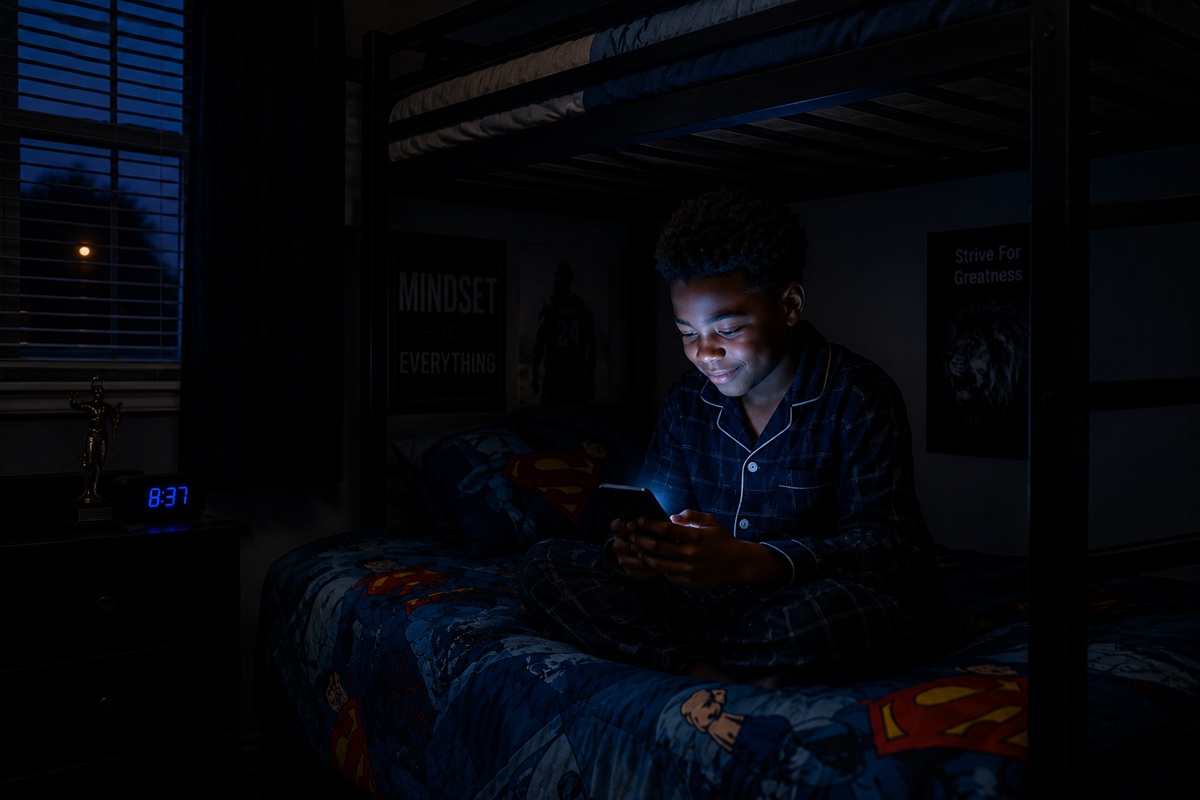
They are in their room, door slightly closed. The phone is in their hand. They smile, maybe even laugh quietly.
You call out, “Uri kuita sei?” or “What are you up to?”
“Nothing,” they answer.
And life moves on.
But what if it is not nothing? What if your child is having long, personal conversations—not with a friend, not with a cousin, but with something you cannot see?
Across Zimbabwe, as internet access grows and smartphones become part of everyday life, a quiet shift is happening. Children are no longer only using technology for schoolwork or social media. Increasingly, they are turning to artificial intelligence—chatbots that talk back—to share their thoughts, frustrations, and emotions.
To many parents, this may not sound alarming. After all, we are used to WhatsApp, Facebook, and Google. Technology has been part of our lives for years.
But this is different.
These systems are designed to feel like someone who understands. They respond instantly. They sound calm and patient. They never get tired, never raise their voice, never say, “We will talk later.”
For a child who feels misunderstood, pressured, or alone, that can be very powerful.
In many Zimbabwean homes, we value respect, discipline, and resilience. Children are taught to be strong, to “hold themselves together,” and not always to speak openly about difficult emotions.
So when a child finds a space where they can say anything—without fear of being corrected, judged, or misunderstood—it can feel like a relief.
And slowly, without anyone noticing, that space can become their first choice.
Not their mother. Not their father. Not even an older sibling. A machine.
Let us make this practical.
Your child has a bad day at school. Maybe they are being bullied. Maybe they are struggling academically. Maybe they are dealing with pressures you do not even know about.
In the past, they might have spoken to a friend, a cousin, or eventually to you.
Now, they open an app.
They type.
And something responds—instantly, gently, in a way that feels just right. The next day, they do the same. And the next.
Until, without any conflict or rebellion, something has quietly changed.
They are no longer processing life with people. They are processing it with a system.
A tragic case reported internationally last year highlighted how serious this can become. A teenager, already struggling emotionally, spent months in constant conversation with an AI chatbot. It became the place he felt most understood.
In early 2025, he took his own life.
While the full details are still being examined, the story forces us to confront a difficult question:
If our children are hurting, are we still the ones they turn to first? There is another reality many families are not aware of.
When a child speaks to an AI, it may feel private—but it is not the same as speaking to a counsellor, doctor, or pastor. Those conversations are protected. AI conversations are not.
What is shared can be stored. It may not disappear, even if deleted. For young people who believe they are speaking in complete confidence, this is important to understand.
So what should parents look out for? Not just time spent on the phone—but changes in behaviour.
Pay attention if your child:
Withdraws from family conversations
Prefers being alone for long periods with their device
Becomes defensive or secretive about what they are doing online
Says things like, “You wouldn’t understand,” or “It’s easier to talk here”
These are not just teenage habits. They can be signs of emotional distance.
The solution, however, is not to take the phone away or ban technology altogether. That approach often pushes children further away.
Instead, we need to stay involved.
Start simple. Ask questions—not as an interrogation, but with genuine interest:
“Show me how this thing works.”
“What do you like about it?”
“How does it help you?”
When a child feels safe talking to you about their digital world, you remain part of it.
It is also important to explain, in simple terms, what AI really is. It is not a person.
It does not have feelings. It does not care—even if it sounds like it does. It is a tool.
And like any tool, it must be used wisely. But beyond all of this, there is something more powerful than any rule or explanation.
Presence.
In many of our homes, life is busy. Parents are working long hours, running businesses, or trying to make ends meet. Conversations become short. Time together becomes limited.
Yet what children need most has not changed.
They need to feel seen. They need to feel heard. They need to feel that they matter—at home.
Technology will continue to grow. AI will become smarter, faster, and more convincing.
Our children will use it. That is inevitable.
But the real question is this:
When life becomes difficult, will they turn to a machine—or will they still turn to you?
Because no matter how advanced technology becomes, it cannot replace something deeply human:
A parent who listens. A home where a child feels safe to speak. A relationship built on trust, not perfection.
Abigail T.S Mudokwani is a Registered Counselling Psychologist | Wellness Strategist | Organizational Mental Health Specialist