By Kudakwashe Pembere
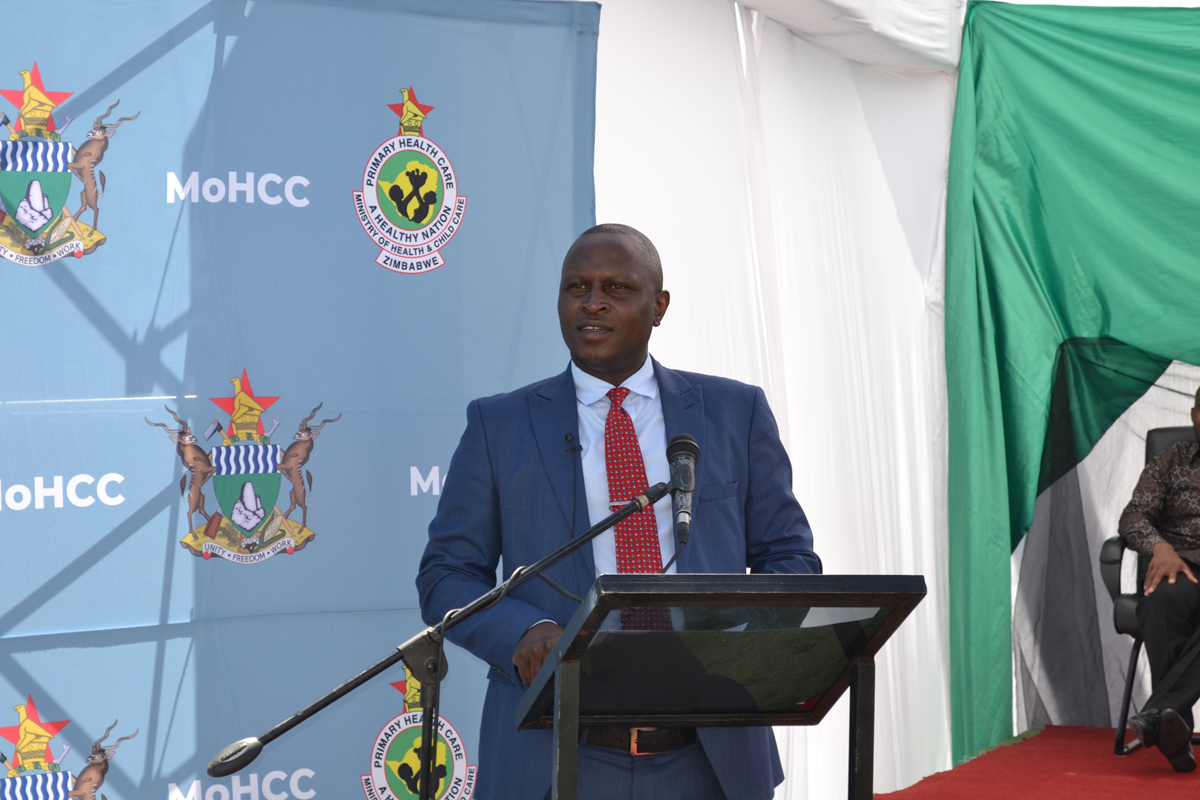
Anticipating the enactment of the National Health Insurance (NHI) scheme by year-end, efforts to finalize the NHI Bill are on course, with Health and Child Care Minister Dr. Douglas Mombeshora confirming it will be sent to Parliament this month.
After decades of consultation and research, Zimbabwe’s proposed NHI scheme is now closer to fruition.
Dr. Mombeshora told a Health Partners Coordination meeting on Friday that the much-awaited scheme will help pool resources for the health sector.
We meet at a time when we are driving ambitious reforms in health financing. We are on track to submit the NHI Bill to Parliament this month and the goal of finalizing it before the year ends,” he said.
“This is a major step toward creating a predictable funding mechanism that pools resources and ring-fences levies and taxes for health. Our goal is simple. Every dollar allocated to health must translate into better health outcomes for our citizens.”
The United Nations Resident and Humanitarian Coordinator, His Excellency Edward Kallon, said the Health Ministry should adjust the insurance framework.
“We believe the Ministry of Health and Child Care is well-equipped to mobilize the necessary resources. Implementing this health financing framework can follow a phased approach: starting with situational analyses and stakeholder engagement in the short term; then, in the medium term, recalibrating insurance schemes and expanding revenue in line with the upcoming National Development Strategy II (NDS-II); and ultimately, ensuring long-term sustainability aligned with Vision 2030 and AU Agenda 2063—building a resilient, self-sufficient health financing system,” he said.
Speaking on behalf of health partners, Dr. Jo Abott suggested Zimbabwe should adopt a phased approach in operationalizing the NHI.
“Let me now then move to another area around NHI. We know you’re very committed to the national health insurance in line with universal health coverage. But I think the RC spoke before me about a phased approach grounded in robust and technical design. It’s a really important area where government I think could make more from available technical expertise amongst partners,” she said.
Dr. Abott added that Zimbabwe should learn from other countries with NHIs and adapt their experiences to create a suitable scheme for Zimbabweans.
“There’s lots of experience on NHIs from around the world. And we’d suggest Zimbabwe looks and learns from the experiences of others around the continent and globally of trying to implement a national health insurance scheme including as close as South Africa across the border as well as up to Ghana and other countries. I think what the evidence shows us is that introducing a NHI is not a quick fix.