By Michael Gwarisa in Mazowe
The National AIDS Council convened a one day sensitisation indaba with councillors from the City of Harare in Mazowe, Mashonaland Central, as part of efforts to strengthen the HIV and AIDS response amid emerging social and health challenges.
The meeting brought together city fathers, government officials and health stakeholders to deliberate on issues increasingly complicating the HIV response, including non communicable diseases, drug and substance abuse, and rising new infections among young people and key populations.
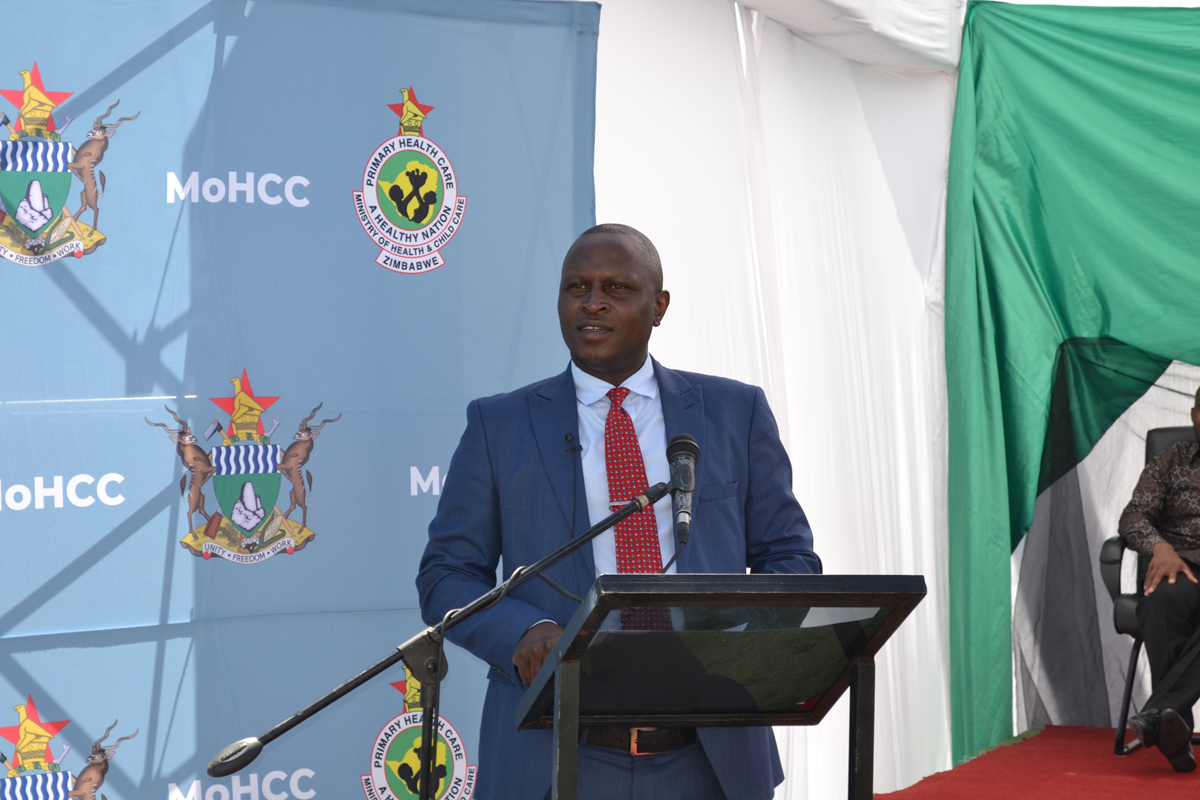
Officiating at the indaba, the Minister of State for Provincial Affairs and Devolution for Harare Metropolitan Province, Senator Charles Tawengwa, warned that the combined impact of HIV, non communicable diseases and substance abuse posed a serious threat to communities if left unaddressed.
As you well know, the impacts of HIV, NCDs, and substance abuse are menacing, not merely affecting individuals but reverberating through families and communities. Today, I urge each of you to reaffirm our collective pledge to ensure that no one is left behind in our efforts to combat these pandemics,” said Senator Tawengwa.
He noted that Harare Province continues to carry a significant HIV burden, with approximately 195,429 people currently living with HIV and a prevalence rate of 8.4 percent. The figures, he said, underline the urgent need for accessible, community driven prevention and treatment programmes tailored to local realities.
The minister further highlighted concerns over new infections, particularly among young people.
“We cannot ignore the accompanying annual incidence of new HIV infections, reaching 2,644 new cases as reported across all age groups. Alarmingly, 1,341 of these cases involve our youth aged 15 to 24 years. This reality underscores the critical importance of targeted awareness and educational campaigns that empower our young population to practice safe sexual and reproductive behaviours in order to reduce transmission rates,” he said.
Reflecting on recent national efforts, the minister said the commemoration of World AIDS Day on 1 December, led by President Emmerson Mnangagwa under the theme “Overcoming Disruption, Transforming the AIDS Response,” was a timely call for renewed commitment. He said the theme resonated strongly at a time when global funding cuts, including reductions in United States support for major HIV programmes, had disrupted service delivery.
He urged leaders at all levels to strengthen resilience, innovation and self reliance, stressing that Zimbabwe’s HIV response must be defined and driven locally. Senator Tawengwa emphasized that collaboration among stakeholders remained essential, echoing the Shona proverb “Chara chimwe hachitswanyi inda,” meaning unity is strength.
The minister also welcomed recent advances in HIV treatment, including the introduction of Lenacapavir, a long acting injectable treatment for people living with HIV. Zimbabwe is among the first ten countries to access the drug, which is administered only twice a year.
He said the innovation would greatly improve convenience and adherence for more than 200,000 people on treatment in Harare Province, and commended the Ministry of Health and Child Care and the National AIDS Council for spearheading such progress.
Equally critical, he added, was the fight against stigma associated with HIV and drug use.
“Stigma remains one of the final barricades to eliminating HIV. It cultivates silence, fear and delayed care. We must champion open dialogue, provide support, and replace judgment with empathy,” he said, noting that Zimbabwe could only reach its full potential when no one is marginalised.
Speaking on the sidelines of the indaba, National AIDS Council Harare Provincial Manager Mr Adonijah Muzondiona said the engagement with councillors was designed to equip civic leaders with information and tools to address challenges affecting the HIV response at community level.
“We know problems that are bedevilling our province, just like other provinces are experiencing, the problems to do with drugs and narcotics, the problems to do with new infections among young people and also new infections among key populations, and also the emergence of non communicable diseases related to HIV and AIDS,” said Mr Muzondiona.
“This is the reason why we have gathered here to share information with these civic leaders, as well as leadership at a government level. These vices and challenges are filtering into the HIV response and giving it serious challenges,” he added.
Mr Muzondiona said NAC was drawing lessons from successful rural initiatives such as the Not In My Village campaign, where traditional leaders play a leading role in addressing harmful practices.
“In rural areas, chiefs are leading the Not In My Village campaign, especially against violence, early marriages and other harmful practices affecting young people. In the urban setup, councillors are the closest leaders to communities, and we should do the same by bringing issues of drugs and alcohol abuse, early marriages, school dropouts for girls and boys to the people,” he said.
He called for collective action involving government, ministers, peers and communities to safeguard the future of young people.
“We should bring everything together and speak with our government, speak with the minister, speak with peers and all concerned people in order to save the lives and the future of this young generation,” said Mr Muzondiona.