By Kuda Pembere
The Ministry of Health and Child Care on Friday inaugurated new boards for four of its key parastatals, marking the start of fresh mandates for the institutions.
The newly appointed boards are for the Medical Research Council of Zimbabwe (MRCZ), the National Pharmaceutical Company (NatPharm), the Health Professions Authority (HPA) and the Zimbabwe National Family Planning Council (ZNFPC).
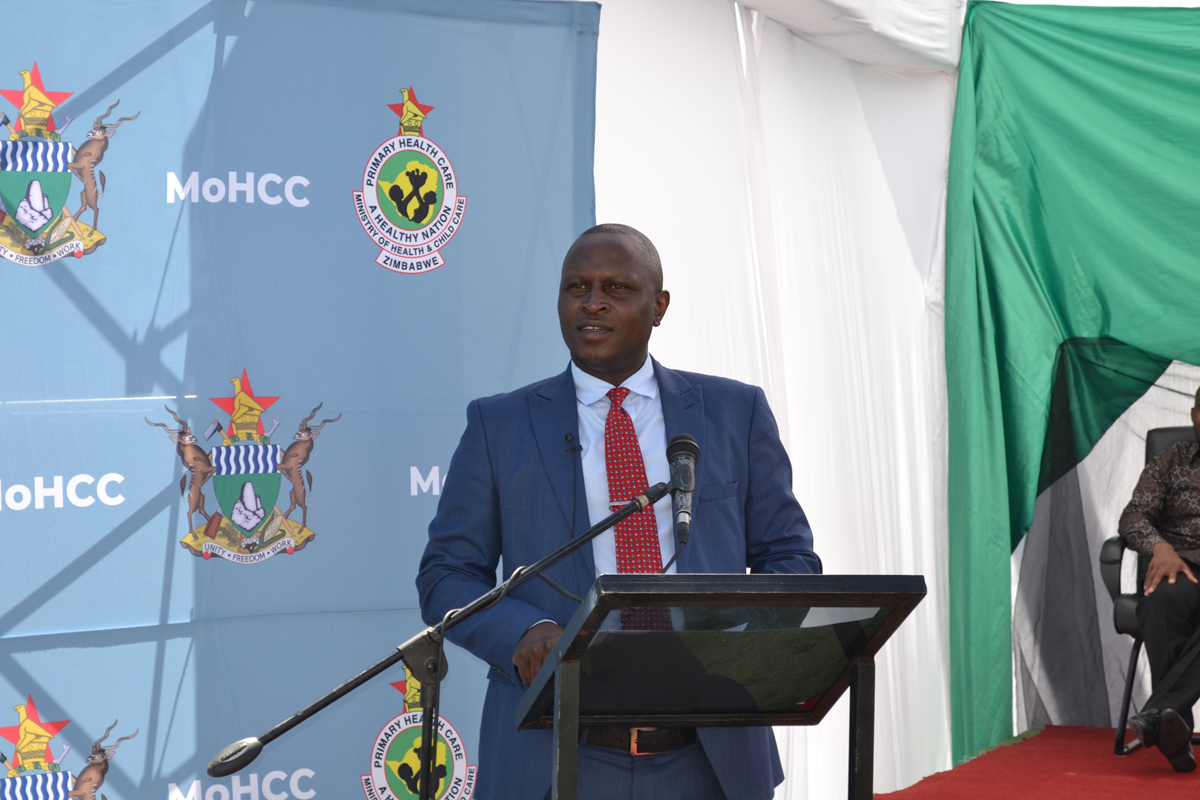
Speaking to journalists after the inauguration of the boards, Health and Child Care Dr Douglas Mombeshora said the first board to be inaugurated was NatPharm, which has been mandated to ensure the consistent availability of medicines across public health institutions.
“This morning, we inaugurated four boards. The first one was the National Pharmaceutical Company board, NatPharm board. Obviously, there were new members coming in and there were some whom we have retained from the outgoing board. Then we went on to give them their mandate to make sure that they know it is their responsibility to avail medicines in all our public institutions,” he said.
Dr Mombeshora added that NatPharm has also been encouraged to expand into local manufacturing and partnerships.
“We are also encouraging them to go into manufacturing, also encouraging them to go into partnerships to ensure that there is technology transfer. Obviously, we are also encouraging them to adopt new technologies, IT, artificial intelligence and all that to make sure that they are more efficient in their operations,” he said.
The minister said the HPA board has been tasked with developing clear regulations that allow for the advertising of health service providers.
“The third board was the Health Professions Authority. We also told them about their mandate and most importantly is to adopt new changes that are taking place, especially in terms of advertising where we want information dissemination going to our population in Zimbabwe so that we do not see people seeking treatment outside the country, yet the same treatment can be accessed in Zimbabwe,” he said.
“There has been a bit of a challenge in terms of saying what is advertising and what is not advertising. So we made it very clear that we should not be retrogressive in terms of denying our people information and also suppressing advancement in terms of information dissemination by our practitioners,” Dr Mombeshora added.
On the MRCZ, the minister said the board has been directed to uphold strict ethical standards in research.
“The last one was the Medical Research Council of Zimbabwe where we were emphasising ethical procedures in terms of our research so that Zimbabwe can also be put on the global map in terms of research,” he said.
NatPharm board chairperson Chiratidzo Ellen Ndlovu said the entity remains focused on strengthening the distribution of medicines while supporting local pharmaceutical manufacturers.
“We are seized with ensuring that medical products reach each and every district in the country, while also making sure that we support local pharmaceutical manufacturers,” she said.
Ndlovu said NatPharm is also moving towards digitalisation.
“We are also hoping to take advantage of all this talk about AI, making sure that we digitalise our systems at NatPharm and ensure that with automation we make things much easier in terms of how we procure medicines, how we stock them or warehouse them, how we distribute them, and also make sure that people on the ground use them,” she said.
HPA president Prof Joconiah Chirenda said the board is concerned by rising malpractice and ethical cases involving health professionals.
“We recognise that the number of malpractice and ethical issues that our practitioners are being charged for is just a symptom of what may be happening,” he said. “As a board, we commit to addressing those challenges so that we take a preventive approach and limit the number of our practitioners who are being asked to come and respond to unethical practice.”
ZNFPC board chairperson Col (Dr) Lioba T. Gunduza said the council is prioritising the expansion and strengthening of youth centres to address teenage pregnancies and related social challenges.
“We are establishing youth centres. They are already there, actually, all over the country. Every province has a youth centre,” she said. “We look forward to enhancing those so that we care more about our adolescents, because they are the ones who are in danger. Remember the issues of drug abuse. They do not have much to do, so they tend to go to other areas that end up harming them.”
MRCZ chairperson Prof Rutendo Gutsire said the board will prioritise updating the Medical Research Act to align it with emerging trends in health research.
“We receive the mandate and we make a commitment to deliver on the MRCZ’s current mandate, also taking cognisance that there is a developing bill which is in the process of being put in place as a law governing health research in Zimbabwe,” she said. “So that is one issue squarely on our plates that we will have to hit the ground running with so that it is put in place as soon as possible.”
Gutsire said the existing law dates back several decades and no longer reflects the realities of modern research.
“In 1974, I was only a few years old when the current act that we are working on was put in place,” she said.