By Kuda Pembere
Zimbabwe received a fifty-four percent score in the second Joint External Evaluation (JEE), performing strongly in laboratory systems, surveillance, emergency response, and immunization indicators.
This was revealed by Dr. Mohammed Ali Mohammed, the lead of the visiting JEE team, which spent five days in the country.
So in summary you can see that thirty out of fifty-six indicators, which is fifty-four percent, attained level three and above, which indicates developed capacity,” he said. “So for this one we can commend Zimbabwe that at least we have attained fifty-four percent of the developed capacity.”
He said the draft report would be finalized within the next fortnight.
“So for next step, we finalize the draft report and send back for country comments within two weeks. Then the country should provide comments and send back to the external team within two weeks of reporting. We should finalize the report within one week of receiving the comments from the country, and then the report will be disseminated and published in consultation with the national authority,” he said.
Zimbabwe’s Public Health Emergency Operations Centre (PHEOC) was hailed as one of the best in Africa.
The National PHEOC, launched in 2020 at the height of the COVID-19 pandemic, played a critical role in controlling that outbreak as well as the cholera epidemic. It was established with support from the Higher Life Foundation and other health partners.
Dr. Mohammed and his team also visited the sub-national Kadoma PHEOC.
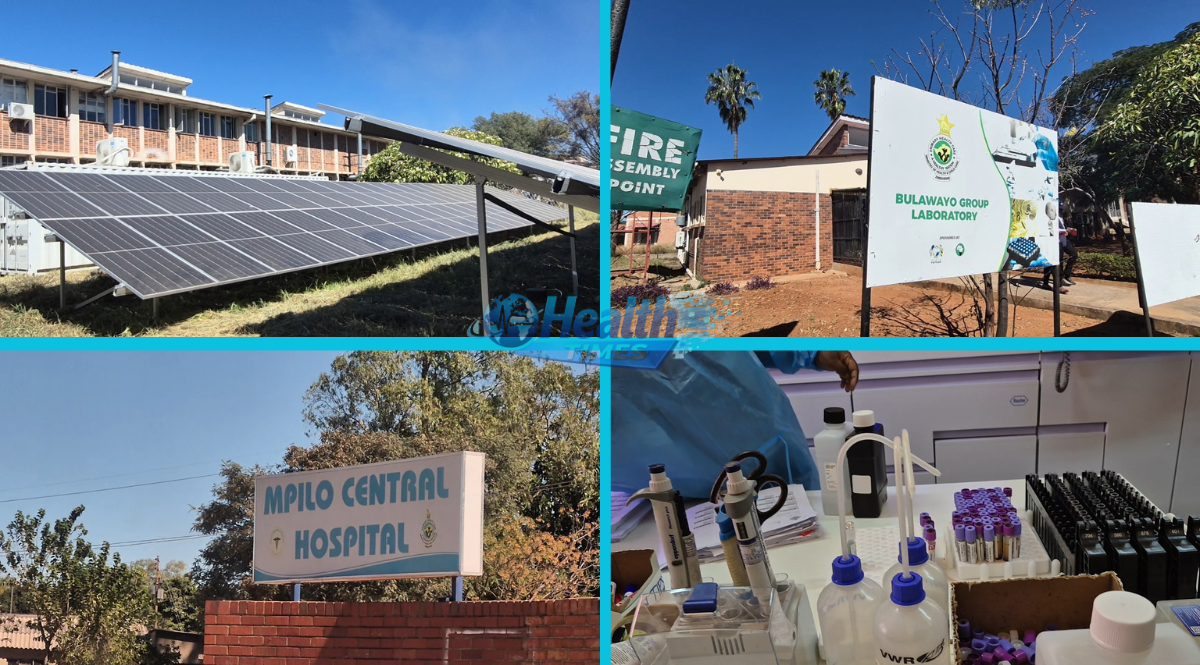
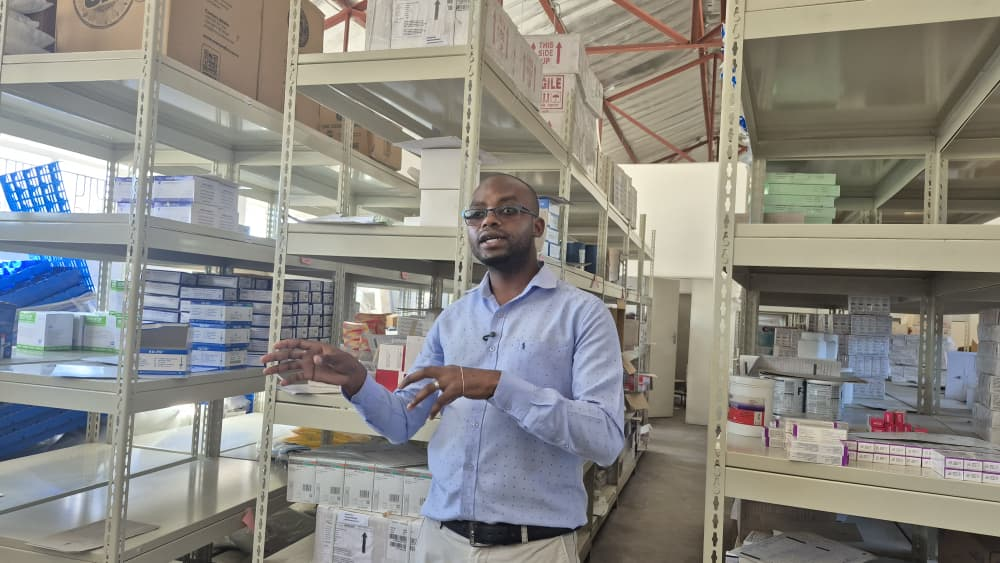
“We have visited several sites, including the National Microbiological Reference Lab, Central Veterinary Laboratory, Government Analytical Laboratory, Sally Mugabe Central Hospital, Central Vaccine Store, Robert Gabriel Mugabe International Airport, National PHEOC, and Kadoma City PHEOC,” he said. “In general, we want to commend the country. We have seen a lot of good work. We actually have a very good example from Zimbabwe, which we can share with other countries, including a very good Public Health Emergency Operations Center.”
He said Zimbabwe’s PHEOC ranked second in Africa after Ethiopia’s regional center in Addis Ababa.
“And for sure, I think if you remove the regional PHEOC in Addis Ababa for CDC, this can be the second one. So it’s a very good one, for sure. Then we actually, from our assessment, we have the overarching strength,” Dr. Mohammed said.
On immunization, Dr. William Mbabazi from the World Health Organization South Sudan, who served as a subject matter expert, told HealthTimes, Zimbabwe recorded the best JEE scores in this category.
“It’s been an amazing experience. I think we have documented from the JEE that Zimbabwe is actually doing very well on most of the indicators,” he said. “But personally, I came here as a subject matter expert on immunization and surveillance systems. And I’m a proud reporter to let you know that immunizations had the best scores in the entire overall assessment of the joint external evaluation.”
Dr. Mbabazi explained that Zimbabwe’s immunization program excelled in three specific areas: measles coverage, vaccine stock management, and vaccine use during emergencies.
“For immunizations, as I said, it scored the best indicators. We look at three indicators. One is the coverage with the measles vaccination. The second indicator we look at is how they are handling vaccines. And the third indicator, we look at how they use vaccines whenever they have emergencies. So the first indicator, they scored very high, level four. And let me assure you that the highest possible score you can achieve is level five. The second indicator on vaccine stockups, they had a score of three. And the last one on the use of vaccines in emergencies, in vaccine-preventable disease outbreaks, they had the maximum score of five,” he said.
He simplified the findings using an analogy.
“So clearly, just to put it in layman’s language, if you look at the immunization program as a vehicle, indicator number one measures the speed with which the vehicle can move. I can confidently tell you that your vehicle can move at one hundred kilometers per hour. The second indicator, which measures vaccines, checks your engine oil. It’s level three. So you have a warning signal that your oil is lowering,” Dr. Mbabazi said.
“And the last one is the rules that govern traffic. When it is dark, are your lights able to function? Because when vaccine-preventable disease outbreaks happen, it’s when you are driving in the night. And we tell you, your beams of your vehicle are perfect, in very good shape. You will turn them on and drive at one hundred kilometers per hour through any outbreak of vaccine-preventable diseases. So really, I am excited. It’s performing very well.”
Health and Child Care Minister Dr. Douglas Mombeshora likened the JEE process to a guiding system for Zimbabwe’s health security.
“At the same time, the JEE has pointed out areas of improvement: health emergency financing, legal instruments, cross-sector coordination, surveillance at points of entry, antimicrobial resistance, and zoonotic disease response. Let me be clear. These gaps are not failures but opportunities. Think of this scorecard as a GPS. It tells us where we are and guides us towards where we need to go,” he said.
Dr. Mombeshora added that Zimbabwe would update its National Action Plan for Health Security (NAPS).
“Moving forward, Zimbabwe will develop and update the National Action Plan for Health Security, fully costed and funded, to strengthen our teams, improve emergency response, and ensure seamless coordination across the One Health sectors,” he said.
WHO Representative to Zimbabwe Dr. Desta Tiruneh said the JEE is intended to build resilience in health systems.
“While JEE measures implementation of IHR core capacities through examination of the nineteen technical areas, it is essentially a health system strengthening and resilience-building exercise. If we are strong in all the nineteen areas, we have a strong health system that can be resilient and ready to tackle any health emergency,” he said.
Africa CDC Southern Africa Regional Lead Dr. Batsirai Mbodza said the JEE provides a strategic foundation for Zimbabwe.